How Repeated Addition Helps Kids Learn Multiplication

Multiplication can feel intimidating at first, especially for young learners who are still gaining confidence with numbers. But there’s an effective way to make everything click: repeated addition.
When multiplication is framed as adding the same number over and over, students connect new ideas to familiar ones. They already know how to add, and this method simply extends that knowledge to a more powerful concept. By grounding multiplication in what they already know, you’re helping students strengthen number sense and lay the foundation for future math skills, including division and fractions.
What Is Repeated Addition?
At its core, multiplication answers “How many in all?” when you have equal groups. For young learners, repeated addition is the natural bridge; you add the same number multiple times to find the total.
Example:
3 × 4 means four groups of three: 3 + 3 + 3 + 3 = 12.
You can use visuals or manipulatives such as dots, blocks, or coins arranged in equal rows or small “baskets” to make the groups concrete.
As students gain confidence, guide them to move between forms. Start with verbal descriptions(“making four groups of three”), then introduce symbols that mean the same thing (3 × 4), and finally, connect it to repeated addition (3 + 3 + 3 + 3). This progression helps learners illustrate these are different ways of expressing the same relationship.
Repeated Addition in 2nd Grade
Teachers often use equal groups, arrays, and number lines when first introducing multiplication to young learners.
Quick examples for 2nd-grade students:
Show 2 + 2 + 2 = 6 which is the equivalent of 3 × 2 = 6
Show 5 + 5 + 5 + 5 = 20 which is the equivalent of 4 × 5 = 20
Hands-on ideas to reinforce learning:
- Build groups with counters, LEGO bricks, or coins.
- Practice skip counting (2, 4, 6, 8) and connect each “skip” to a group.
The goal in these exercises is understanding. Children should see multiplication as “equal groups” before they memorize facts. That way, when they encounter bigger numbers or word problems later, they have a deeper conceptual understanding. Keep repeated addition Grade 2 activities short, concrete, and playful for home practice.
How Repeated Addition Builds Multiplication Skills
Repeated addition turns what your learners already know about adding into a clear pathway to multiplication. As they combine equal groups like 3 + 3 + 3, they see that multiplication is simply a more efficient way to represent the same idea, with the × symbol serving as a concise shorthand for adding the same quantity again and again.
One example is when you model groups in rows and columns, also known as arrays. This visual structure makes the concept easier to grasp because students can clearly see how repeated groups build a total that can be counted or added.
Presenting repeated addition and multiplication alongside arrays and number lines reinforces that multiplication isn’t a new idea. Instead, it is a faster way to express what is already known. For example, 4 groups of 5 apples can be shown as:
5 + 5 + 5 + 5 = 20
And can also be written as:
4 × 5 = 20
Making these comparisons helps learners move from conceptual understanding to fluent recall.
Fun Activities To Teach This Concept
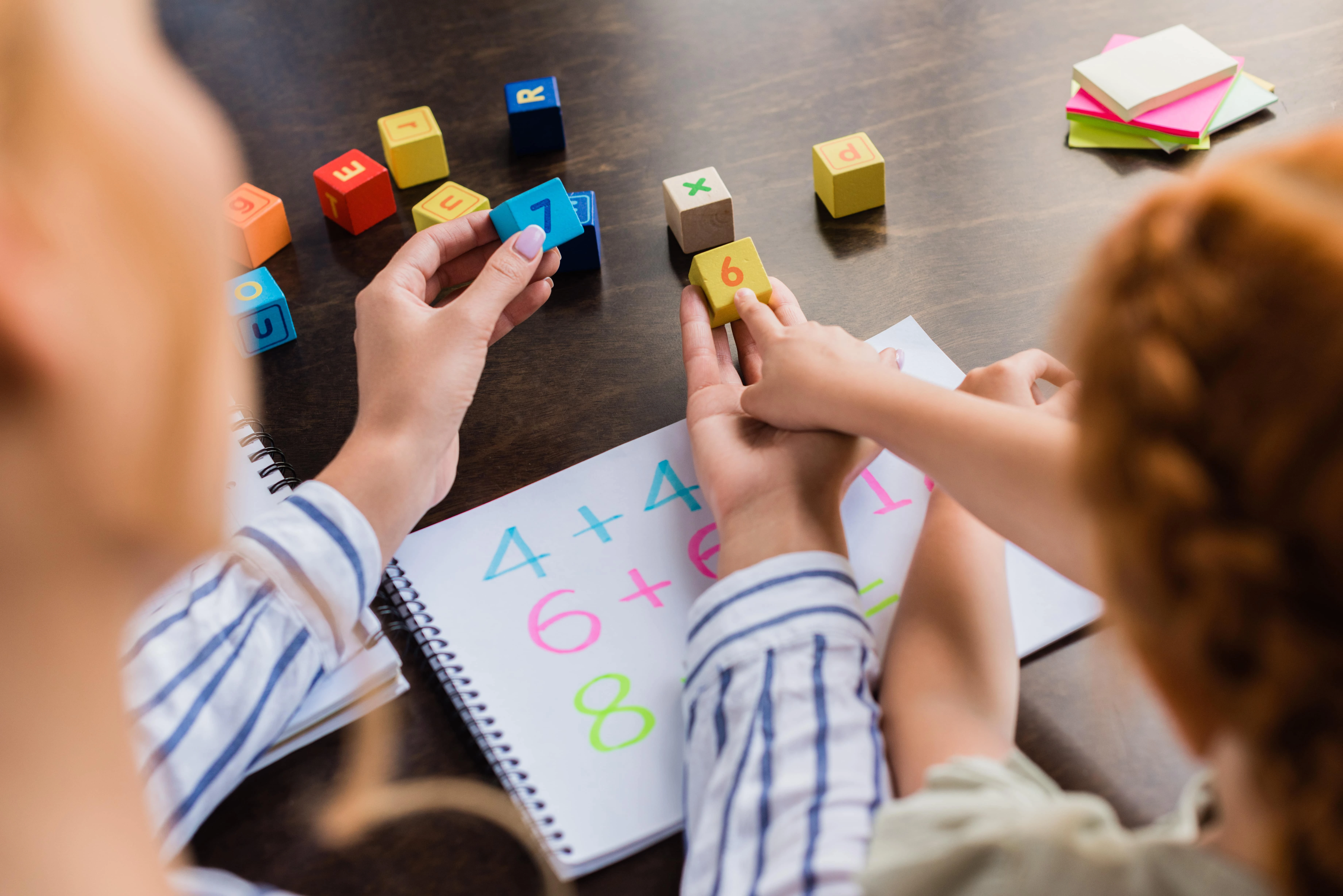
Make learning tactile and visual by using lessons that are a little game-like. Here are a few suggestions:
- Array Building: Use blocks or stickers to make neat rows and columns. Have learners write the matching addition and multiplication sentences underneath.
- Number-Line Jumps: Draw a line, start at 0, and make equal jumps (e.g., 5 jumps of 3). Count out loud and record the total and the equation.
- Skip-Counting Moves: Clap, stomp, or jump while counting by 2s, 5s, or 10s, then connect each count to a “group.”
- Story Problems: Do a chalkboard activity or object lessons while telling a story. Part of the story includes math problems. For example, during storytelling, you say, “There are 3 baskets with 4 apples each. How many apples should there be in all?” Learners can draw baskets with the corresponding number of apples inside, add 4 three times, and then write 3 × 4.
- Dice Addition Game: Roll one die for the group size and another for the number of groups. Build, add, then multiply.
- Interactive Drawing: Sketch groups of objects and tally them. This activity keeps the child’s attention on structure rather than memorization.
These activities reinforce that repeated addition and multiplication are a structured way to see equal groups, no matter the context or object you use during play.
Tips for Parents and Teachers
- Start Small and Concrete: Begin with tiny groups (2s, 5s, 10s) and physical objects.
- Think Aloud: Encourage kids to say the addition process (“five plus five plus five”) before writing the multiplication.
- Bridge to Symbols: Once the idea is clear, introduce × and link it back to groups.
- Short, Playful Practice: Multiple 5-minute bursts beat one long drill session.
- Mix Modalities: Rotate between objects, drawings, number lines, and arrays to keep engagement high and deepen understanding.
From Repeated Addition to Confident Multiplication
This approach is the stepping stone that transforms the practice of “lots of adding” into confident multiplication. As you go over the activities described in this guide, coupled with short practice sessions, learners can build conceptual understanding first, and then math fluency follows. Encourage kids to explore, draw, move, and talk as they think about the math processes.
Are you ready to make practice feel like play? Prodigy Math turns conceptual learning into an adventure with grade-aligned, in-game challenges that reinforce facts. Try Prodigy Math free today and help your learner grow their skills!